Ratings guide ·
Madden NFL 27 Grades: OVR Bands and Player Context
Searching for Madden NFL 27 grades? The clearest answer is that OVR is the visible rating signal in the current public sample, while any grade band on this page is an editorial way to read that OVR. Use the table and examples below to compare players without turning a single number into an official EA claim.
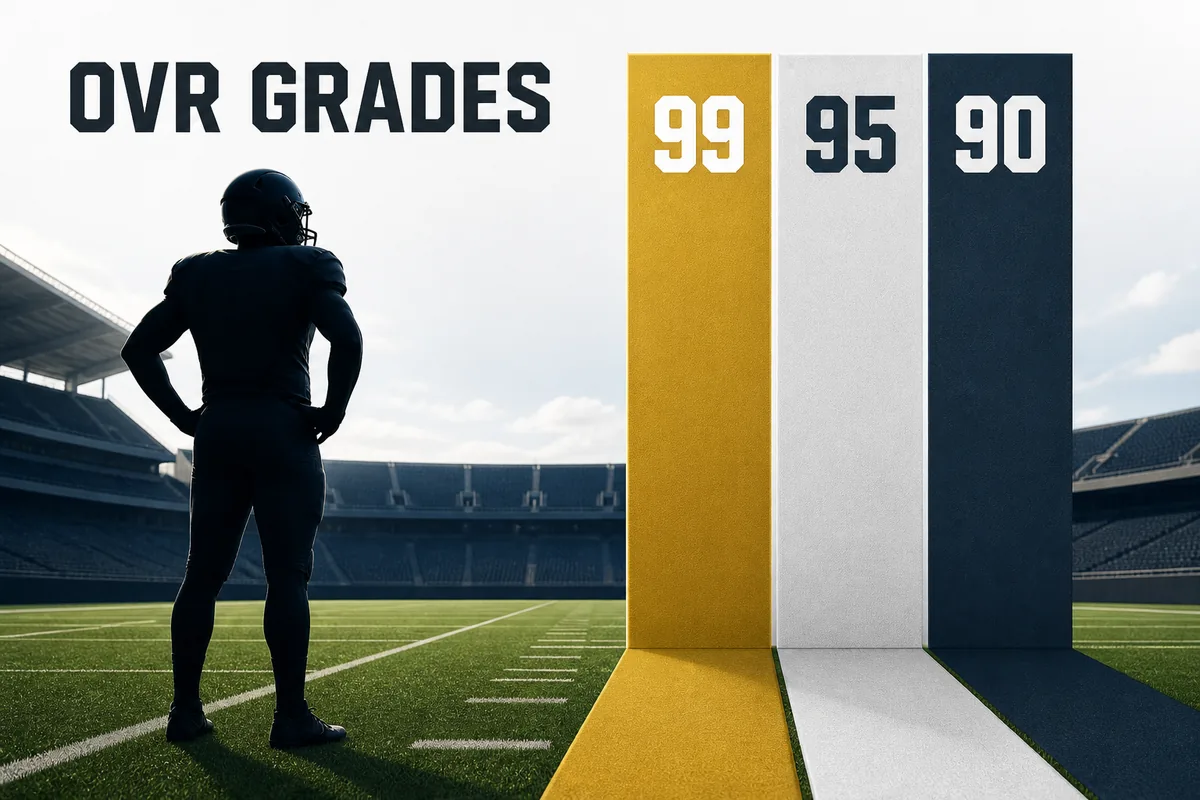
Madden NFL 27 grades are best understood as a combination of the published OVR and the context around that player. The current public sample reaches 99 OVR and contains 100 records, but it does not expose an official letter-grade system or every attribute. The editorial bands below make comparisons easier; they should not be mistaken for EA's official language.
What Madden NFL 27 grades actually mean
The word grade can describe several things in Madden discussions. Some searchers mean a player's OVR, some mean a position ranking, and others expect a letter or tier from an official database. The public data used here gives us a defensible starting point: player name, OVR, position, team, and a source date. It does not give us a separate official letter grade that can be presented as fact.
That distinction is important because a clean-looking tier can sound more authoritative than it is. On this page, Elite, High, and Solid are editorial labels placed around OVR ranges so a reader can scan the table quickly. They summarize the current sample; they do not say that EA assigns those exact labels, that every player in the game is covered, or that a tier predicts how a roster will feel in every scheme.
The practical answer is therefore two-part: use OVR as the published number, then use the band as a quick comparison shorthand. Searches for Madden 27 overalls or NFL overalls in Madden 27 are best answered by showing the number with its player context. If the question is who fits a roster better, add position, team, role, and any attribute data that a verified source actually publishes.
Read OVR bands without overclaiming
The table is intentionally narrow. A 99 OVR belongs at the top end of this public sample, while a 95 or 90 OVR can still represent a high-value player depending on position and roster need. The band gives the reader a fast first pass, but it should not replace the player row or the source note beneath the ratings tool.
The best comparison is usually within the same position group. Comparing a quarterback with a cornerback by a single OVR point can answer a very limited ranking question, but it does not answer a scheme or roster question. A wide receiver and a linebacker can share an OVR while contributing in completely different ways, so role context belongs beside the grade shorthand.
Treat the band as a scan aid rather than a promise. A small gap can be useful when two players share a position, yet it is not proof that one will outperform the other in every mode. The public rating may also change after a reveal or roster update, which is why the date and source remain part of the comparison.
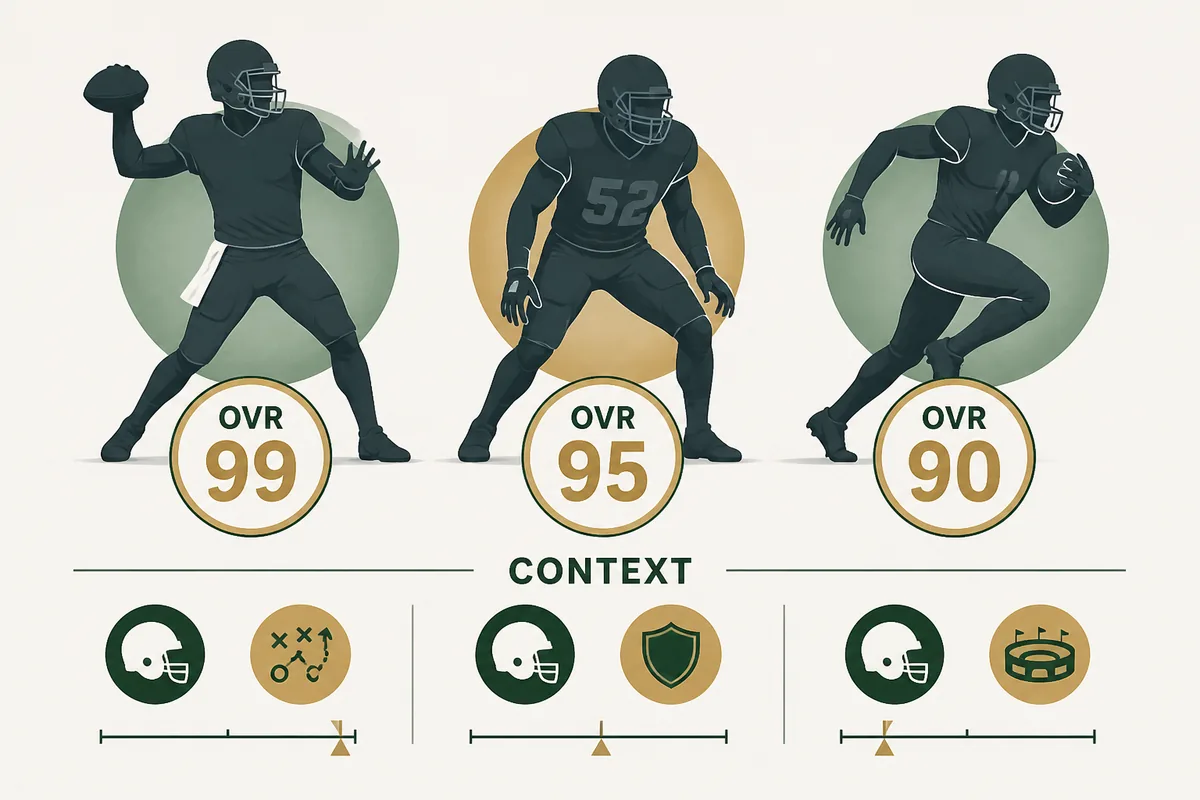
What the current public sample shows
The local dataset contains 100 public records extracted from EA's Madden NFL 27 ratings page on August 1, 2026. The visible fields are name, OVR, position, team, age, years pro, and a broad offense or defense type. That is enough to build a readable OVR list and compare the top end, but it is not enough to claim full-roster coverage or a complete attribute database.
The sample currently runs from 99 OVR down to 89 OVR. For readers searching for Madden 27 99 overalls, that top value is a useful starting point, but it remains tied to the sample date. The range explains why the table is useful for a Top 100-style scan while the grades page focuses on interpretation. If you need a known player, team, or position, use the player finder and filters. If you want the records in rank order, use the Top 100 page. This guide sits between those two tasks by explaining what the number means.
Keep the scope visible when you reuse a result. A player row without a source date can look like a permanent rating, and a short list can be mistaken for the whole game. The safest workflow is to record the OVR, player, position, team, and check date together, then open EA's public ratings page when the value matters for a current roster or comparison.
How to verify a Madden NFL 27 rating
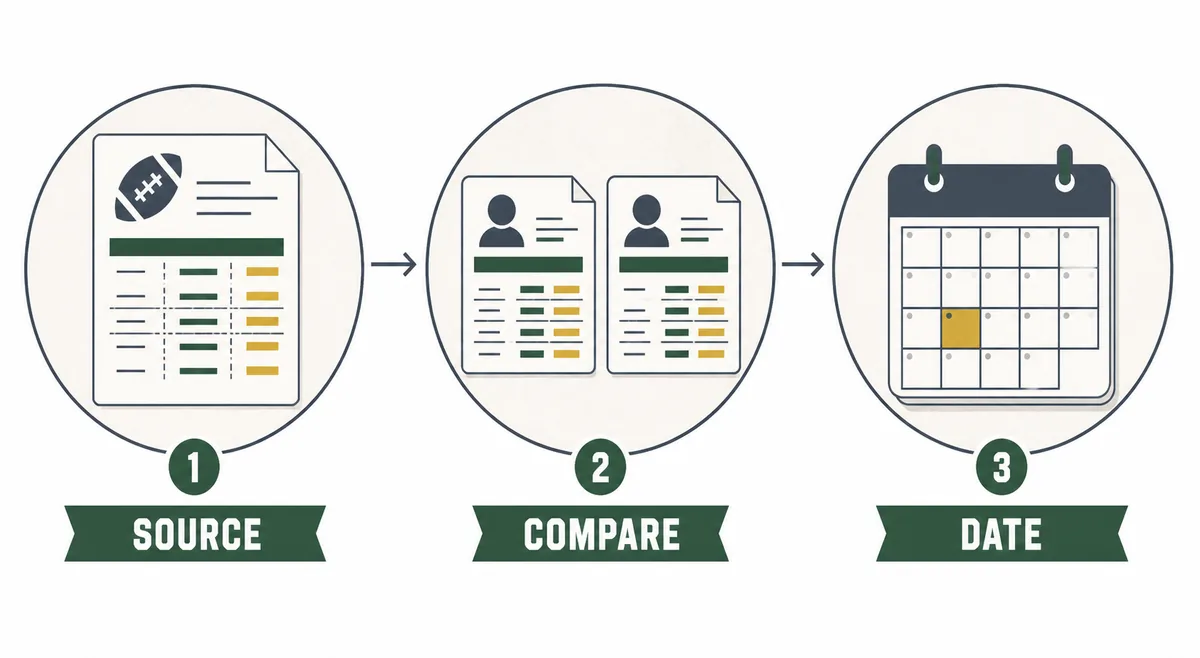
Verification starts with the source, not with a screenshot or a remembered number. Open EA's public Madden NFL 27 ratings page, find the same player, and check the team and position before comparing OVR. A matching name alone is weak evidence because roster labels and public lists can change during a ratings cycle.
Next, compare the same fields in both records. If the OVR differs, keep the old sample date and the new source date instead of silently replacing one with the other. That makes it possible to describe the result as changed, corrected, or unresolved. If only a social post or video mentions a number, treat it as a lead rather than official confirmation.
Finally, decide what the result is allowed to prove. It can show that a published OVR changed or that one player ranks above another in the checked sample. It cannot prove a hidden speed attribute, a complete roster order, or an official letter grade unless the source explicitly publishes that information.
- Open EA's public Madden NFL 27 ratings page and record the check date.
- Find the same player and confirm team and position before comparing OVR.
- Compare the OVR with this dated sample and preserve both values if they differ.
- Classify the result as verified, changed, corrected, or unresolved instead of calling it latest without evidence.
What this Madden NFL 27 grades page does not claim
This page does not publish an EA-owned grading scale, a live feed, or a complete Madden NFL 27 roster database. It organizes a dated public sample and adds an editorial reading aid so users can understand the relationship between OVR, position, team, and source date. The page should be refreshed when the verified source changes, not when a rumor starts circulating.
It also does not infer speed, acceleration, abilities, archetypes, or gameplay performance from OVR. Those are different data points. The current sample does not contain them, so filling the gap with a guessed number would make the page look more complete while making the answer less trustworthy. When a search needs an attribute, use a source that explicitly publishes that attribute.
Madden27Ratings.blog is an independent fan utility and is not affiliated with Electronic Arts, EA SPORTS, the NFL, or any team. Use this guide to scan and compare, use the player and team pages for narrower lookups, and use EA's public page for official confirmation whenever the rating affects a current decision.
Madden NFL 27 grades FAQ
What are Madden NFL 27 grades?
The visible rating in this site's public sample is OVR. Elite, High, and Solid are editorial bands that make OVR easier to scan; they are not official EA letter grades.
How should I read Madden 27 overalls?
Start with the OVR number, then compare position, team, and source date. The current sample reaches 99 OVR, but that does not create a complete NFL overalls ranking or an official letter grade.
Does a 95 OVR player always beat a 90 OVR player?
Not for every roster question. Compare players in the same position first, then consider team, role, and any verified attribute data.
Are these Madden NFL 27 grades official?
No. This is an independent editorial guide built around a public EA ratings source. Use EA's page for official confirmation.
Where can I verify a Madden 27 rating?
Open EA's public Madden NFL 27 ratings page, confirm the player, team, and position, then compare OVR with the dated sample shown here.
In short
Use Madden NFL 27 OVR as the factual number and treat a grade band as a quick editorial shorthand. The current public sample reaches 99 OVR across 100 records, but it is not a complete roster or official letter-grade database. Compare position and team, keep the source date, and return to EA when a rating needs current confirmation.